
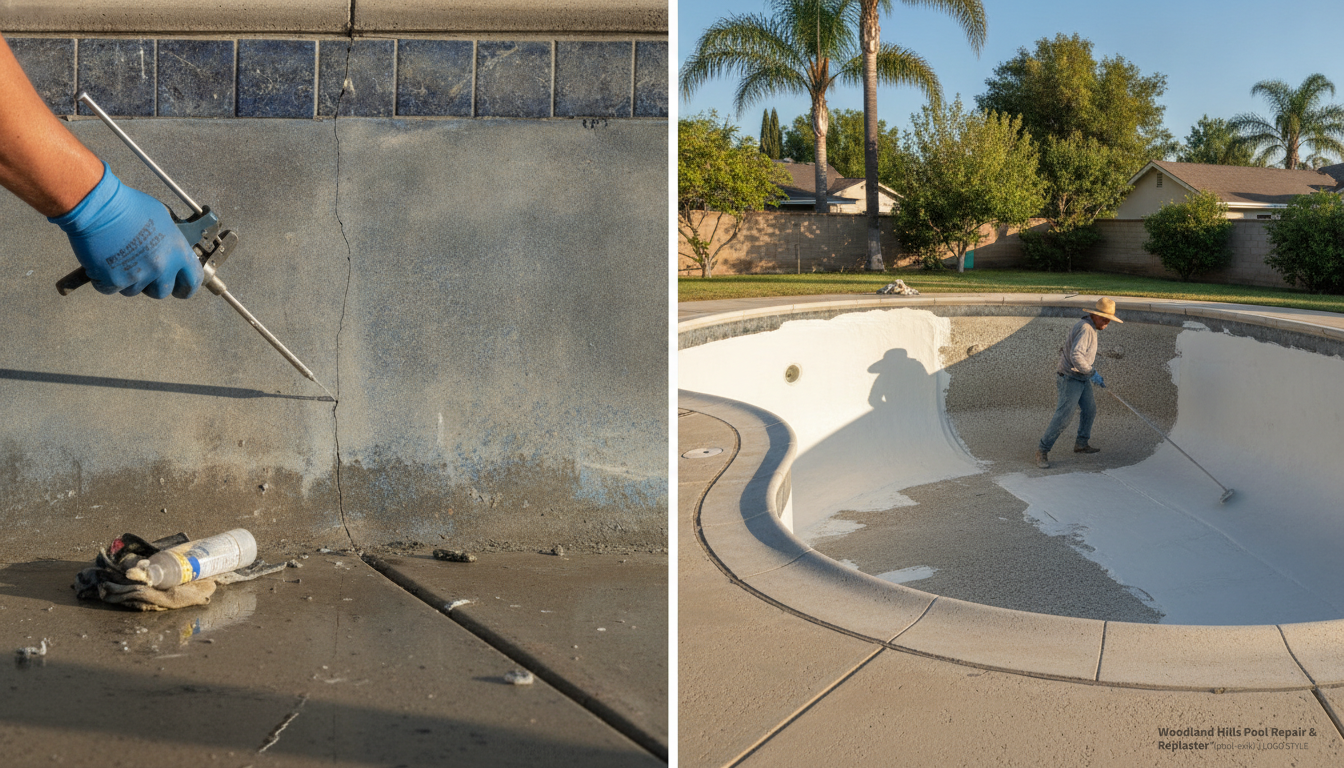
The Question Every Leaking Pool Owner Asks
When your Woodland Hills pool starts losing water, the first instinct is to find the leak and fix it. But after a professional inspection reveals cracked plaster, deteriorating fittings, and perhaps a few shell fractures, a second question often emerges: is it worth patching everything individually, or does the pool need a full replaster? At Woodland Hills Pool Repair & Replaster, we walk homeowners through this decision every week. The answer depends on several factors — and getting it right saves you money over the long run.
When Targeted Leak Repair Is the Right Call
Not every leaking pool is a candidate for replastering. If your pool's interior finish is generally in good condition — meaning it's smooth, uniformly colored, not chalky or rough to the touch, and hasn't exceeded about 10 to 12 years of age — and the source of water loss is isolated to one or two specific components, targeted repair is typically the most efficient and economical path.
Common single-source repairs that don't require a full replaster include:
- Skimmer and return fitting leaks: A cracked skimmer barrel or failed return fitting gasket can cause significant water loss but is often repairable in a single visit. Our skimmer and return fitting repair service uses dye testing to isolate the exact failure point before any material is removed.
- Underground plumbing breaks: A cracked PVC return line or suction pipe is a targeted plumbing problem. Our pool plumbing leak repair team excavates only above the confirmed break point, replaces the damaged pipe section, and pressure-tests before backfilling.
- Main drain gasket failures: Many main drain leaks can be addressed underwater without draining the pool — replacing the gasket and cover hardware in a single appointment.
- Isolated shell cracks: A single structural crack in an otherwise sound shell is an ideal candidate for epoxy injection or chiseling and patching. Our pool shell crack repair service confirms each crack as a leak point via dye test before any repair work begins.
When Replastering Is the Smarter Investment
Targeted repairs make sense when leaks are isolated. But when the underlying plaster finish is deteriorated across large areas of the pool, targeted patching becomes a cycle of recurring repairs rather than a real solution. Here are the indicators that point toward a full pool replastering project:
- Plaster age over 12–15 years: Standard white marcite plaster has a typical lifespan of 10 to 15 years in Woodland Hills' UV-intense climate. If your plaster is approaching or past that threshold, patching is likely to look mismatched and fail sooner than new material.
- Widespread surface roughness or chalking: Rough plaster isn't just uncomfortable underfoot — it signals that the calcium-silicate matrix is breaking down, creating micro-porosity that contributes to chronic low-level water loss across the entire shell surface.
- Multiple crack locations: When a pool leak detection inspection reveals five or more active leak points — a combination of shell cracks, fitting failures, and surface delamination — the cost of individual repairs often approaches or exceeds the cost of a full replaster, which solves all surface-level issues simultaneously.
- Delaminating or hollow-sounding plaster: Tap your pool walls. If you hear a hollow sound in multiple areas, the plaster bond has failed and water is already migrating behind the finish layer. No amount of surface patching will correct a delamination — the old plaster must come off.
- Permanent staining or discoloration: Organic stains, rust marks, and mineral scale that have penetrated into the plaster cannot be acid-washed away after a certain point. A fresh surface is the only way to restore the pool's appearance.
The Cost Comparison
The cost of individual leak repairs varies based on scope — a skimmer gasket replacement is a relatively minor investment, while multiple underground plumbing excavations can add up quickly. A full replaster project addresses all surface-related leak sources simultaneously and resets the plaster clock to zero, typically delivering 10 to 20 years of service depending on the finish material selected. When the repair estimate for individual issues approaches 50 to 60 percent of the replastering cost, most homeowners and our technicians agree that a full replaster is the wiser investment.
What a Diagnostic Inspection Tells You
The starting point for this decision is always a professional inspection. Woodland Hills Pool Repair & Replaster provides a written diagnostic report after every pool leak detection appointment — itemizing every confirmed leak point, the recommended repair method for each, and the associated cost. That transparency lets you compare the total targeted repair scope against a replastering quote with real numbers in hand.
We serve pool owners throughout Woodland Hills and the greater San Fernando Valley, including Calabasas, West Hills, Canoga Park, and Tarzana. Call us at (747) 774-4437 any day from 8:00 AM to 6:00 PM to schedule your inspection and get the information you need to make the right decision for your pool.